
So, Meta’s new Chief AI Officer sent out a memo. You know the type. The kind of email that hits your inbox before you’ve had your first cup of coffee, dripping with the kind of corporate doublespeak that makes you want to throw your laptop out the window. He was announcing that 600 people in the AI division were being shown the door.
The reason? To “increase efficiency and speed up decision-making.”
Let me translate that for you. Alexandr Wang, the new guy, wrote, "fewer conversations will be required to make a decision." What he really means is, "I don't want to argue with the people who were here before me." This isn't about efficiency. It's about consolidating power. It’s the corporate equivalent of a new king executing the old court just to make sure everyone knows who's in charge. And they expect us to nod along and call it innovation.
Give me a break.
Let's get the timeline straight, because it’s a real piece of work. For months, Meta has been on an absolute tear, throwing hundreds of millions of dollars around like confetti to poach the biggest names in AI from Google, OpenAI, you name it. They even dropped a cool $14.3 million on a company called Scale AI, which—surprise, surprise—was run by the same Alexandr Wang they just hired to be their AI czar.
Then, after spending a fortune to bring in these high-priced superstars, what’s their first big move? They fire 600 of the "legacy" employees. The people from the Fundamental AI Research (FAIR) unit—the very group that gave Meta any credibility in the AI space to begin with—are now on a "non-working notice period." It’s a fancy term for purgatory, where you’re still technically employed but everyone knows you’re just waiting for the severance check to clear.
Imagine that scene. You’re a researcher who’s been with the company for years, grinding away on foundational models, and you get an email at 6:55 a.m. telling you your access is cut. Meanwhile, the new hotshot who just got a multi-million dollar package is talking about "synergy" and "streamlining." As one user on Blind put it, you’re being laid off by people who joined a few months ago and are getting paid millions. This is just business. No, "just business" doesn't cover it—this is a five-alarm dumpster fire of corporate backstabbing.
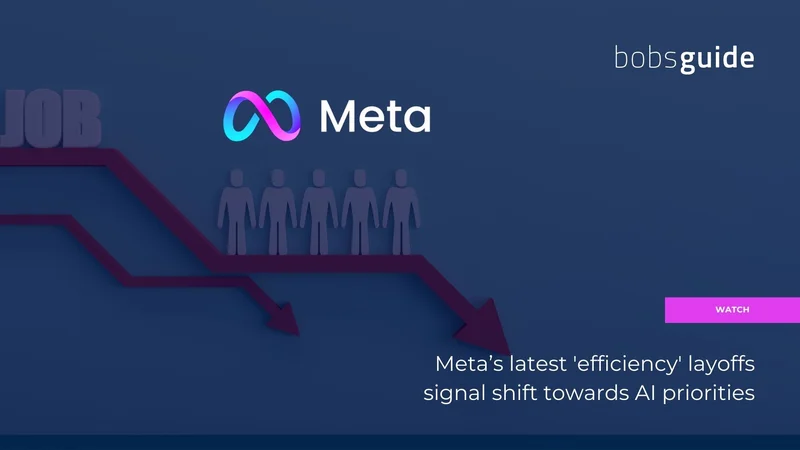
What message does this possibly send to anyone left? That loyalty is a one-way street? That your years of work are worth less than the hype surrounding the next guy they hire? It’s a culture killer, plain and simple.
Everyone’s terrified that AI is coming for their jobs. But this? This ain't that. As one HR consultant, Bryan Driscoll, pointed out, "AI's not replacing workers yet en masse. But it's being used an excuse to do so."
And that’s the real grift here. This whole maneuver is a performance for Wall Street. It’s a strategic reshuffle meant to make the company look lean, decisive, and laser-focused on the thing that makes investors salivate: AI products. Not AI research, mind you. Products. The stuff you can ship and monetize tomorrow. They’re gutting the R&D department to beef up the assembly line.
Think of it like this: Meta’s AI division was a sprawling, creative workshop with different teams of artisans. Some were carving intricate, beautiful sculptures that might one day be masterpieces (that was FAIR), while others were making coffee mugs they could sell in the gift shop (the product teams). The new boss came in, looked at the sculptures, and said, "This is taking too long. Melt it all down and make more mugs. Mugs sell."
This move isn't about building a truly "Superintelligent" AI. Offcourse not. It’s about optics. It’s about looking like you’re making hard choices, even if those choices are breathtakingly short-sighted. They’re cashing in their long-term credibility for a short-term stock bump. The internal chatter was that the AI division was "bloated," with teams competing for resources. Well, the new regime just solved that competition by shooting one of the competitors. They're centralizing control, and they're doing it under the guise of progress.
And then there's the memo itself. I swear these things are written by a template. The hollow phrases about "impact" and "scope" feel so detached from the reality of 600 people having their lives turned upside down. They’re gutting the very research teams that built their reputation, and for what? A slightly faster product cycle that...
Then again, maybe I'm the crazy one. Maybe this is just how the world works now. You chew people up, spit them out, and call it progress.
Let's stop pretending this is some grand, strategic pivot toward a brighter technological future. This is a classic corporate shakedown, wrapped in the shiny new language of artificial intelligence. It's not about building better AI; it's about pleasing shareholders. It's about a new executive marking his territory. The 600 people who lost their jobs weren't redundant; they were inconvenient. They were the "old way" of doing things, and in Silicon Valley, there's no greater sin than being old. The severance package isn't generosity; it's the price of silence. The whole affair is a depressing reminder that in the tech world, the only thing that's truly valued is the next big thing, and the people who built the last big thing are completely expendable.



ONON Stock: Unpacking the Future Potential
2025-11-13